Dental Implants · Cost Guide · USA
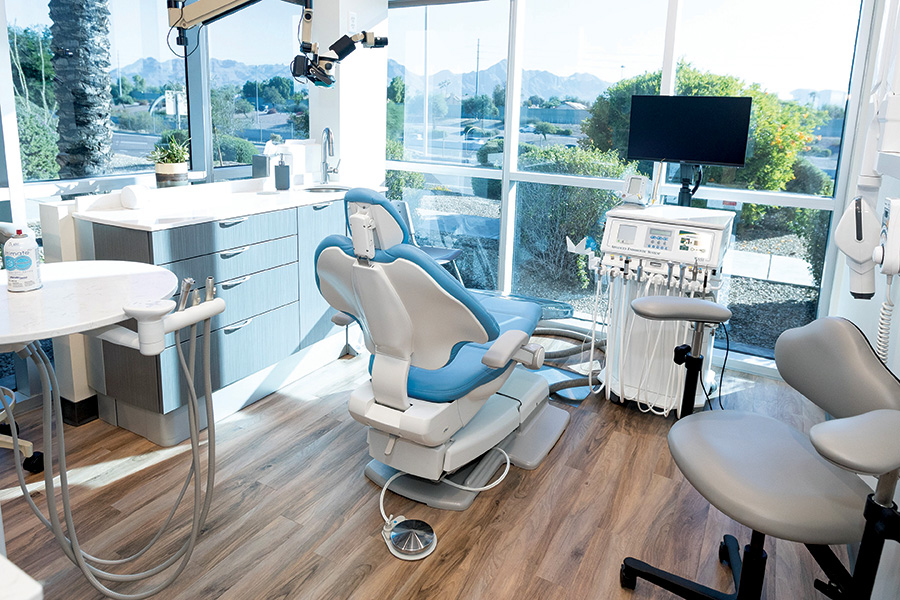
What you actually pay for a dental implant in the US depends on far more than just the implant itself.
If you’ve been quoted a price for a dental implant and felt like you were reading a car lease agreement — page after page of numbers that don’t add up — you’re not alone. Dental implant pricing in the United States is notoriously opaque, wildly variable, and almost never what it looks like at first glance.
This guide breaks down what a dental implant actually costs in 2025, what’s driving those prices, and what Americans are increasingly doing about it.
The Sticker Price vs. The Real Price
When a dental office quotes you “$3,000 for an implant,” they usually mean the implant fixture only — the titanium screw that goes into your jaw. That number doesn’t include:
- The abutment — the connector piece between implant and crown ($300–$500)
- The crown — the visible tooth on top ($1,000–$2,000)
- The extraction — if the old tooth needs to come out first ($150–$400)
- Bone grafting — required if you’ve had bone loss, very common ($400–$3,000)
- CT scan / 3D imaging — needed for implant planning ($150–$500)
- Consultations and follow-ups — often billed separately
Add it up and a “single implant” frequently runs $4,500 to $7,000 all-in. In major cities, $8,000 to $10,000 is not unusual.
Real Cost Breakdown: Single Implant in the US (2025)
| Component | Typical US Cost |
|---|---|
| Implant fixture (titanium post) | $1,500–$3,000 |
| Abutment | $300–$500 |
| Crown (zirconia or porcelain) | $1,000–$2,000 |
| Extraction (if needed) | $150–$400 |
| Bone graft (if needed) | $400–$3,000 |
| Imaging / CT scan | $150–$500 |
| Total (all-in estimate) | $3,500–$9,000+ |
Why Does It Cost So Much?
The implant hardware itself — the titanium screw, the abutment, the crown — is manufactured by a handful of global companies. Straumann, Nobel Biocare, Zimmer Biomet. These components cost roughly the same whether you’re a dentist in Dallas or a dentist in Tirana. The price difference is everything that surrounds the procedure.
In the United States, a dental practice carries enormous overhead:
- Malpractice insurance — tens of thousands of dollars per year per dentist
- Staff costs — dental hygienists, assistants, front desk, billing specialists
- Real estate — a dental suite in a medical building in a major US city is expensive
- Equipment financing — CBCT scanners, surgical guides, CAD/CAM milling machines
- Billing complexity — the cost of navigating insurance claims is built into every procedure
None of this makes the implant better. It just makes the bill bigger.
What Does Insurance Actually Cover?
Here’s the short answer: almost nothing useful.
Most US dental insurance plans have an annual maximum of $1,000 to $2,000. Even plans that technically “cover implants” often cover only a portion of the crown — not the fixture, not the bone graft, not the imaging. The net result is that insurance might reduce a $6,000 implant bill by $500 to $800 if you’re lucky.
Worse, implants are frequently classified as “cosmetic” or “elective” — even when they’re the medically appropriate replacement for a missing tooth. This gives insurers cover to deny coverage entirely.
The CareQuest Institute found that patients who hit their annual dental benefit maximum were more than twice as likely to seek care abroad. When your plan has paid out its $1,500 and you’re still $5,000 short, the math on a flight to Tirana starts looking different.
City-by-City: What Americans Are Actually Paying
| City | Single Implant (all-in) | All-on-4 (per arch) |
|---|---|---|
| New York City | $5,500–$9,000 | $25,000–$40,000 |
| Los Angeles | $4,500–$8,000 | $22,000–$38,000 |
| Chicago | $4,000–$7,500 | $20,000–$35,000 |
| Miami | $3,500–$7,000 | $18,000–$32,000 |
| Houston | $3,000–$6,000 | $16,000–$28,000 |
| Rural / Midwest average | $2,500–$5,000 | $14,000–$24,000 |
Even in the cheapest US markets, a full-mouth restoration runs $14,000 minimum. For most Americans without significant savings or a very generous benefits package, that number is simply not accessible.
What Are People Actually Doing About It?
Three paths have emerged for Americans who need implants but can’t or won’t pay US prices:
1. Dental schools — University dental programs offer implants at reduced rates ($1,500–$3,000 all-in), performed by supervised students. Waiting lists are long, the process is slow, and not everyone qualifies. But for a single implant with time to spare, it’s a legitimate option.
2. Dental savings plans — Not insurance, but discount membership programs (Careington, Aetna Dental Access, etc.) that negotiate reduced rates with participating dentists. Discounts of 20–40% are typical. Still leaves you paying $2,500+ for a single implant in most cases.
3. Dental tourism — Flying to a country where the same procedure, with the same implant brands, costs 70–85% less. This is now the most common form of medical tourism among US adults. Albania, Turkey, Mexico, and Hungary are the most common destinations. Albania in particular has gained traction for its combination of low cost, internationally trained dentists, and Straumann/Nobel Biocare implants.

How the Top Destinations Compare — and Why Tirana Wins
Most Americans shopping for dental work abroad default to Mexico or Turkey because those are the names they’ve heard. But the math tells a different story. Here’s a direct comparison for the two most common treatments:
| Destination | Single Implant (all-in) | All-on-4 (per arch) | vs. US Cost |
|---|---|---|---|
| 🇺🇸 United States | $4,500–$7,000 | $18,000–$40,000 | — |
| 🇲🇽 Mexico (Los Algodones) | $1,200–$1,800 | $8,000–$14,000 | ~65% saving |
| 🇨🇷 Costa Rica | $1,400–$2,000 | $9,000–$15,000 | ~60% saving |
| 🇹🇷 Turkey (Istanbul) | $900–$1,400 | $5,500–$9,000 | ~75% saving |
| 🇭🇺 Hungary (Budapest) | $1,100–$1,600 | $7,000–$11,000 | ~70% saving |
| 🇦🇱 Albania (Tirana) | from ~$850 | from ~$4,500 | Up to 85% saving |
Tirana comes out ahead on price across every treatment. But cost alone isn’t the whole story — here’s what else separates Albania from the pack:
- vs. Mexico — Mexico is convenient for patients near the border, but implant brands are often lower-tier (local or Korean) to hit the price point. Albanian clinics use Straumann and Nobel Biocare as standard. Quality gap is real.
- vs. Turkey — Turkey is high-volume and factory-paced. You’re one of dozens of patients per day. Albania offers a boutique experience — a named doctor, a dedicated coordinator, genuine continuity of care. Prices are also lower.
- vs. Costa Rica — Costa Rica targets the premium end of dental tourism. Good quality, but significantly more expensive than Albania with no meaningful advantage in outcomes.
- vs. Hungary — Hungary is excellent for European patients. For Americans, the flight is just as long as Albania but the savings are smaller. Hungary also costs more because its EU membership has pushed wages and overhead up.
Albania sits in a unique position: it has the cost structure of an emerging market with the clinical standards of Western Europe. EU-adjacent protocols, internationally trained dentists, and Swiss implant hardware — at prices that still reflect local overheads rather than tourist premiums.
At Alba Med Health, we coordinate implant treatment in Tirana for patients from the US, UK, and Germany. A patient flying from New York for All-on-4 saves $13,000 to $35,000 after flights and hotel. That’s not a discount. That’s a different financial reality.
Get a Free Cost Estimate
Send us your X-rays or treatment plan and we’ll give you an exact quote for the same procedure in Tirana — including which implant brand, which clinic, and what the all-in cost looks like with flights from your city.
See Implant Options & Pricing →Sources
- CareQuest Institute for Oral Health — Crossing Borders for Care: Dental Tourism among US Adults
- American Academy of Implant Dentistry — Dental Implant FAQs
- Consumer Guide to Dentistry — Dental Implants Cost Guide 2025